Thursday, August 2, 2012

Microsoft replaces Hotmail with Outlook

Hotmail is set to be consigned to history, marking the end of the era when the electronic mail service introduced many people to Internet and thanks to its Indian inventor, Sabeer Bhatia, heralded the country's prowess in technology. 

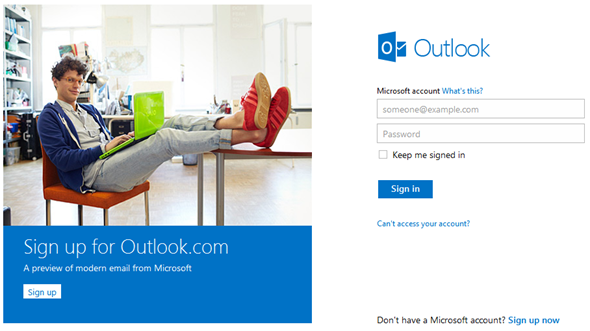
Microsoft on Wednesday launched Outlook.com, which it said will replace Hotmail, a move that is seen to be aimed at taking on increasing competition from Gmail,Facebook and Yahoo

This spells the death of the free Web-based email service that Microsoft had bought from Bhatia and his colleague at Apple, Jack Smith, in 1998 for about $400 million, probably the biggest sum earned by an enterprise started by an Indian at the time. 

That was about a decade before the advent of Gmail and two years after Bhatia and Smith launched Hotmail. The Chandigarh-born Bhatia, who grew up in Bangalore and was educated at St Joseph's Boys before moving to the Silicon Valley, immediately came to represent the rising Indian techie in global imagination. Nothing that he did thereafter came close to the adulation that he received with his first creation. 

In Microsoft's words, when the US was filling up theatres to see the Hollywood flick Independence Day on July 4, 1996, Bhatia and Smith quietly liberated the world from the era of the snail mail and the new chic avatar of email was born. 

"Back then in 1996, it was novel to have a personal email address you could keep for life - one that was totally independent from your business or internet service provider," said Chris Jones, Microsoft's corporate vice-president of Windows Live services. 

Hotmail quickly grew to 40 million users within three years. Currently, it commands over 370 million users, more than the size of the entire US population. But aggressive bundling of web search and email helped Google capture the top spot with Gmail, which has about 425 million accounts. Yahoo! Mail is still behind Hotmail, though, with about 310 million users. 

"We think the time is right to reimagine personal email, from the data centre to the user experience," said Jones. 

Many Hotmail users have welcomed the decision. "It was a much-needed move by Microsoft. With all the various login IDs of Hotmail, Windows Live ID, Xbox Live or Windows Phone, Microsoft was just confusing the average user," said Clinton Jeff, well-known technology and mobile blogger, while adding, "But with Hotmail being rechristened Outlook, it may confuse the lay web users who use Outlook Express to configure emails offline."

Sunday, July 15, 2012

DVD Video Courses for Campus Placement and Bank Exam Preparation

These DVDs courses with high quality material are available at an affordable price. List of DVD Video courses are given below for your reference:

Video Solutions for Top IT Company Placement Papers (DVD)

Spoken English (DVD + Books)

How to crack the Job Interview? (DVD)

Bank Exam Preparation (DVD)

Methods to find Whether a Company is Real or Fake (Fraud)

Steps to Know Whether a Company is registered or not ?
Step 1: Click on below link to Open the Ministry of Corporate Affairs


Step 2: Enter the Company name (Don't try with Short Forms or half names)


Step 3: If the company is not registered you will get a Pop-up Like


Step 4: If the company is registered you will get information like


  1. LLPIN/CIN/1A Ref No
  2. Company or LLP Name
  3. State
  4. Registration Date
  5. Company Status


Step 5: If you get the information like above that particular company is registered by Govt. of India.

Sunday, July 8, 2012

What the DNSChanger malware is -- and why you should care (FAQ)

Now nearly 5 years old, DNSChanger still infects hundreds of thousands of computers. If you've got it, you'll probably lose your Internet connection on Monday. Read our FAQ to learn what this malware is and how to stop it.


The DNSChanger malware has been around for years, but its deleterious effects are coming to a head this Monday. Here's what you have to know about it, and how to fix it.
What is DNSChanger?
DNSChanger is a Trojan horse malware with many variants. It changes an infected computer's DNS settings to point to rogue, bad guy-controlled servers. These then show you ads that look real, but aren't. Basically, it redirects your legitimate Web surfing to malicious Web sites that then attempt to steal personal information and generate illegitimate ad revenue.
How much money did DNSChanger make?
From the time it was discovered around 2007 until six Estonian scammers were caught in November 2011, DNSChanger scored them upwards of $14 million, reportedly.
What does DNSChanger do?
DNSChanger changes your Domain Name System settings without your permission. This is bad because DNS is basically the Internet's phone book crossed with a map. DNS links a URL, such as CNET.com, to an IP address. (An IPv4 address would be something like 192.1.56.10, while an IPv6 address would look like 1050:0:0:0:5:600:300c:326b.) DNSChanger changes that and redirects search results and URLs to malicious sites that are designed to either serve you ads to malicious sites, or intend to illegitimately collect your login information.
If the bad guys have been caught already, why does DNSChanger still affect people?
Simply put, the malware was exceedingly effective and infected hundreds of thousands of computers. Prior to the bad guys being arrested, the Federal Bureau of Investigation and German Federal Office for Information Security created a redirect of the redirect, so that many people infected by DNSChanger would still go to the legitimate Web sites that they intended to visit.
After the arrests, the two governments agreed to keep the rogue DNS servers running until March. Then they learned that there were still around 450,000 active DNSChanger infections, and so the servers got a reprieve until Monday, July 9.
If your computer's been infected and you haven't fixed it by July 8, your Monday morning will be even worse than normal.
So the Facebook alerts and Google warnings about DNSChanger were legit?
Yep. And around 330,000 people were still infected with DNSChanger as of the end of May, with about 77,000 of those in the U.S.
Google's warning that appeared at the top of search results.
(Credit: CNET)
How can I tell if I'm infected?
If you're in the United States, go to dns-ok.us or its parent site, the DNSChanger Working Groupfor computers based outside of the U.S. Click on the URL appropriate to your country, and you'll see an image with a green background if you're clean. A red background means you're infected.
Help! My computer's infected with DNSChanger. How can I fix it?
The DCWG has a list of free tools to download and instructions on how to clean a computer infected with DNSChanger.
How can I avoid malware like DNSChanger in the future?
Security suites aren't perfect, but they will protect you from the vast majority of threats out there including DNSChanger. Whether you're on Windows or MacAndroid or iOS, you really ought to have some kind of security program installed. And always double-check the URL before entering personal information into any kind of online text field or form, no matter what operating system or device you're using.

source:cnet.com

FeedCount

Ads 468x60px

Social Icons